हामी नेपालीको ‘नेपाली’

आज जापानको अध्यमन बिभागबाट यस्तो पत्र आयो । पत्र हेर्दा एकै पटकमा हर्ष र विस्मातको अनुभव भयो । हर्ष यो कुरामा कि, बिदेशीप्रति पठाइएको यो पत्रमा अंग्रेजी, जापानी, कोरयाली, चीनिया, आदिको साथैमा नेपाली भाषामा पनि लेखिएको रहेछ । जसले जापानमा नेपालीहरूको व्यापक उपस्थितिको संकेत गर्छ, सायद । विस्मात यस मानेमा – त्यस पत्रको नेपालीको स्तर देख्ता लाज र हाँसो लागेर आयो ।

पत्र सायद कुनै नेपाली नागरिकले जापानी वा अंग्रेजीबाट नेपाली उल्था गरेको हुन सक्छ । अनुवाद गर्नेले चाहेरै हेलचक्र्याइँ गरेको भन्न सकिँदैन । हिजोआज औसत युवाहरूको नेपाली भाषा यस्तै देखिन्छ । हिज्जे भनौँ, भाषाशैली भनौँ, शब्दचयन भनौँ । हरेक पक्ष कमजोर छन् । कुरा यो चिठीलाई अनुवाद गर्ने व्यक्तिको भन्दा पनि हामी नेपालीहरूको भाषा-कमजोरीको हो । जब हामी आफैँले आफ्नो भाषामा दख्खल राख्न सक्तैनौँ, हामीले मानव-विकास र समाज-विकासमा अगाडि जान सक्ने सम्भावना छैन ।

हामी नेपालीहरूको आफ्नै भाषामा कमजोर रहेको तथ्यप्रति सबै सजग हुने बेला आएको छ, विशेष गरी अभिभावकहरूले ।

जापानको सीमाविवाद र नेपालको लागि शिक्षा

जापानको लागि अहिले सबभन्दा टाउको दुखाईको विषय बनेको छ – सीमाविवाद । यो कतातिर जाँदैछ र नेपालले के शिक्षा लिन सक्छ, छलफल गरौँ ।

जापान – टापूहरूको देश । वरिपरिका तीनै वटा राष्ट्र – रूस, दक्षिण कोरिया, र चीनसँग बिभिन्न टापुहरूको विषयलाई लिएर लामो समयदेखि विवाद पर्दै आएको छ । पछिल्लो समयमा विशेष गरी चीन र कोरियासँगको झगडाले चर्को रूप लिएको छ ।

माटोको मूल्य अमूल्य । चीनियाँ, कोरियाली, र जापानीहरू अधिक राष्ट्रप्रेमी देखिन्छन् । त्यसैले यो सीमाविवाद अँझै चर्किने सम्भावना देखिन्छ । विवादित टापुहरू आर्थिक रूपले महत्त्वपूर्ण सम्भावना बोकेका कारणले पनि सबै मुलुक आफ्नो पोजिसनमा अडिग छन् ।

रूस
रूससँगको सीमाविवाद दोश्रो विश्वयुद्धजति नै पुरानो हो । जापानको उत्तरी टापु होक्काइडोभन्दा अँझै उत्तरतर्फका टापुहरूमा रूसले आफ्नो नियत्रणमा लिएको छ । यद्यपि जापानले आफ्नो दावी अँझै छोडेको छैन । केही वर्ष अगाडि मात्रै जापानी माझीहरूलाई रूसले नियन्त्रणमा लिँदा एक जनाको ज्यान गएको थियो । गत महिना मात्र रूसी प्रधानमन्त्री मेडभेडले यो टापुको भ्रमण गरी आफ्नो नियन्त्रणको सन्देश दिए । यो टापु रूसको लागि प्रसान्त महासागरमा निस्कने महत्त्वपूर्ण नाका भएकोले रूसले आफ्नो दावी छोड्ने सम्भावना देखिँदैन ।

दक्षिण कोरिया
जापानी भाषामा ताकेसिमा र कोरियालीमा दोकुतो नामको टापु अर्को विवादित टापु हो । यो टापुलाई कोरियालीहरूले लामो समयदेखि हक हालिरहेको छ । जापानीहरू फेब्रुअरी २२ तारिखलाई ताकेसिमा-दिवसको रूपमा लिने गर्छन् । यो टापु कोरियाली नियन्त्रणमा छ भने पनि हुन्छन् । गत महिना कोरियाली राष्ट्रपति ली म्युन-बाकले यस टापुमा पुगेर ‘कोरिया’ शब्दलाई सुम्सुम्याएका दृष्यहरूले निकै चर्चा पाए । कतिले यसलाई राष्ट्रपतिको पुन-निर्वाचनको लागि लिइएको पब्लिसिटी स्टन्टको रूपमा हेरेका छन् । तर कोरियालीहरू राष्ट्रवादी विषयलाई यति उच्चस्तरमा प्राथमिकता दिएकोमा उनको समर्थनमा देखिन्छन् – उनकै चाहना बमोजिम । अनि जापानी प्रधानमन्त्रीले कोरियाली राष्ट्रपतिलाई पठाएको ‘बिरोध पत्र’लाई कोरियाले अस्वीकार गरेर फिर्ता गरेको, अनि त्यसलाई जापानले फिर्ता लिन नमानेको अचम्मको समाचारहरू पनि देख्न पाइयो । त्यसपछि कोरियाली केटाहरू उक्त टापुसम्म पौडेर जाने, टापुभित्र बास्केटबल म्याच गरेको, आदि दृष्य पनि देखिन आएका छन् । लन्डन ओलम्पिकमा कोरियाली फुटबल खेलाडीले ‘ताकेसिमा हाम्रो हो’ भन्ने प्लेकार्ड लिएकोले पुरस्कार वितरण समारोहबाट बञ्चित भएको पनि देखियो ।

चीन
रूस र कोरियालीहरूसँगको विवाद र चीनसँगको बिबादमा के फरक छ भने, यहाँ मात्र जापानको नियन्त्रण देखिन्छ । जापानसँग बिबादित सेन्काकु-टापुहरूमा केही वर्ष यतादेखि चीनको दावी चर्किँदै आएको छ । यी टापुहरू वरिपरि प्राकृतिक ग्याँसहरू भएको प्रमाणहरू भेटिएका छन् । त्यसमाथि पनि प्रसान्त महासागरको ‘गेट’को रूपमा भौगोलिक रूपमा भूमिका खेल्न सक्ने भएर यी टापुको आर्थिक महत्त्व झनै बढेको छ । पोहोर चीनिया डुङ्गाहरू सिधै जापानीको कोस्टगार्ड डुङ्गासँग ठोक्किएको तस्वीर युटुबमा सार्वजनिक हुँदा निकै चर्चा पायो । गत महिना हङ्कङ्बाट माछा मार्नेहरू जहाजमा सेन्काकु-टापुमा प्रवेश गर्न खोज्दा जापानी कोस्टगार्डले नियन्त्रणमा लिई डिपोर्ट गरे । त्यसको विरुद्ध चीनमा व्यापक विरोध भयो । जापानी कम्पनीहरूमाथि ढुङ्गामुढा भए । जापानी कुटनीतिज्ञको गाडीमाथि आक्रमण भयो । यता जापानको राजधानी टोकियो प्रिफेक्चरका मेयर सिन्तारो इसिहाराले सेन्काकु-टापुलाई सरकारसँग २ अरब येनमा खरिद गर्ने योजना सार्वजनिक गरे । यो कदमलाई जापानमा निकै सकारात्मक रूपमा हेरिएको छ । इसिहारा आफैँमा प्रचुर राष्ट्रवादी (नेस्नलिस्ट)को रुपमा चिनिन्छन् ।

अमेरिकाको ‘असंलग्न नीति’
यी विवादित टापुहरूसम्बन्धमा कुनै न कुनै रूपमा ऐतिहासिक (र अहिले पनि) रूपमा महत्त्वपूर्ण भूमिका रहे पनि यी सबै विवादबिच अमेरिका भने केही प्रतिकृया दिन चाहिरहेको छैन । जापान र दक्षिण कोरिया उसको लागि महत्वपूर्ण ‘मित्र’हरू हुन् । चीन पनि उसको सबभन्दा ठुलो व्यापारिक मित्र हो । ऊ यी देशहरूले वार्ताद्वारा समस्या समाधान भएको देख्न चाहन्छ । र, त्यसको सम्भावना न्यून देखिन्छ ।

नेपालको लागि शिक्षा
चीनियाहरूको सीमाविवाद नहुने छिमेकी राष्ट्र नै कुनै पो होला र ? बीपीको पालासम्म पुरै नेपालको रहेको सगरमाथा, महेन्द्रको पालामा आधा चीनको भइसकेको अवस्था छ । पूर्वी एशिया र जापानमा सगरमाथालाई चीनको ‘छोमोलोङ्मा’ भनेर चिन्नेहरू धेरै छन् ।चीनको बढ्दो आर्थिक शक्ति र बिकराल स्वरूपसँग नेपाल सजग हुने अवस्था आइसकेको छ । अहिले हामी नेपाललीलाई चीनिया सीमा मिलाउने सायद अन्तिम मौका छ । कुनै दिन यस्तो देख्न नपरोस् जब सगरमाथा चढ्न चीनिया भिसाको आवस्यक पर्नेछ । उत्तरी भेगको सीमामा नेपाली बस्तीहरू र सीमाबलहरू तैनाथ नगरे वर्षै पिच्छे एउटा-एउटा डाँडो गरी नेपाल मिचिँदै नजाला भन्न सकिन्न । झन अहिलेको तरल राजनैतिक अवस्था अँझै चल्ने र र ‘सस्ता’ अनि नैतिकहीन नेताहरूमा राज्यको चाबी पनि बसिरहने हो भने माथि उल्लेख गरेको अवस्था नआउला भन्न सकिन्न ।

Related
Japan’s Territorial Disputes – by John Sylvester
Soviet–Japanese border conflicts
Liancourt Rocks (Takeshima)
Senkaku Islands dispute


HeNN अक्षयकोषको निमित्त संकलित रकमको विवरण

Help Nepal Network (HeNN) को १० करोड अक्षयकोषको लागि आज अगस्ट २५, २०१२सम्म १,१६,५००  जापानी-येन जम्मा भएको कुरा यसै ब्लगमार्फत सार्वजनिक गर्न चाहन्छु । रकम HeNN को सल्लाहमा र मेरो आफ्नै समय-अनुकुल ध्यानमा राखेर PayPal अथवा सिधै बैँकमा ट्रान्सफर गरिनेछ । ट्रान्सफरपश्चात यही ब्लगमार्फत सो कुराको जानकारी दिनेछु ।

रकम संकलन करीब एक महिना अगाडि जापानमा रहेका केही मित्रहरूलाई ईमेलमार्फत सोझै सम्पर्क गरी सुरुवात थिएँ । साथीहरूबाट ईमेल र फोनमार्फत राम्रा प्रतिकृया आए ।

संकलनको कुरा अगस्ट ११ मा यही ब्लगमार्फत सार्वजनिक पनि गरियो । रवीन्द्र मिश्रज्यूले ट्विटर र फेसबुकमार्फत त्यो लिंकलाई सेयर गरिदिनुभएपछि अरू केही सकारात्मक प्रतिकृया आए ।

अहिलेसम्म चन्दा सहयोग गर्नेहरू चाहिँ व्यक्तिगत रुपमा नजिकका साथीहरू नै छन् । सायद यहाँ ‘विश्वास’को कुरा छ । हालसम्मको प्राप्त रकम HeNNलाई हस्तान्तरण गरिसकेपछि, अर्को चरणहरूमा अरूहरूबाट पनि सम्पर्क होला नै, हेर्दै जाऊँ ।

अहिलेसम्म जापानबाट प्राप्त रकम हेर्न यता जानुहोस् । (Updated Sep 1, 2012)

यस बाहेक कपिलदेव थापाले छुट्टै रू एक लाख यस कोषलाई पहिले नै प्रदान गरिसक्नुभएको रहेछ । हिजो वहाँसँग यस विषयमा कुराकानी भएको थियो । जापानवासी भएको नाताले यो वहाँको नाम यहाँ उल्लेख गरेको छु ।

हुन त अन्य मित्रहरूले पनि सहयोगको ईच्छा देखाउनुभएको छ । त्यसमध्ये कोहीले त नेपालमा हुँदादेखि र त्यसपछि जापानबाट पनि HeNNलाई सहयोग गर्नुभएको रहेछ । कति भनेर किटान नगरिसक्नुभएको अवस्थामा वहाँहरूको नाम सार्वजनिक गरिसकिएको छैन । अर्को चरणमा संलग्न गर्ने कोशिष गरिने छ ।

के तपाईँ जापानमा बस्नुहुन्छ ? र यस अक्षयकोषलाई सहयोग गर्न चाहनुहुन्छ ? ईच्छुक मित्रहरूले kumarsimkhada [at] gmail.com मा सिधै मलाई पत्राचार गर्नुहोस् । वा टेलिफोन ०४८-२८०-६१८५मा सम्पर्क गर्नुहोस् ।

Related
Appeal for Rs 100m Charitable Endowment Fund
HeNN’s Rabindra Mishra’s Facebook Page


हेल्प नेपाल नेटवर्क र १० करोडको अक्षयकोष

हेल्प नेपाल नेटवर्क (Help Nepal Network : HeNN)का अग्रता रवीन्द्र मिश्रको अग्रसरतामा शुरु भएको १० करोड अक्षय कोषसम्बन्धी विस्तृत जानकारीको लागि HeNN को आधिकारिक पृष्ठमा वा रवीन्द्र मिश्रको फेसबुक पेजमा पढ्न सकिन्छ ।

HeNNको गतिबिधि बिगत केही वर्ष अगाडिदेखि नियाल्दै आएको छु । यो संस्थामा आवद्ध व्यक्तित्वहरू, यसका उद्देश्यहरू, र यसका अहिलेसम्मका गतिबिधिहरू हेर्दा यसलाई विश्वास गर्ने प्रसस्त ठाउँ देखिन्छ । विश्वासयोग्य व्यक्ति र संस्थाहरूको खडेरी परेको हाम्रो मुलुकको लागि रवीन्द्र मिश्र र यो संस्था मदनकृष्ण-हरिवंश र माइती-नेपालसँग दाँज्न सकिएला ।

हुन त च्यारिटीबाट देश कहिल्यै बन्न सक्तैन । यो सत्य हो । देश बनाउन त देशका जनशक्तिको थोपा-थोपा पसिनाहरू जम्मा हुनुपर्छ । कम्पनी-व्यवसायहरू खोल्नुपर्छ, रोजगार बढाउनुपर्छ, कलकारखाना बढाउनु पर्छ । तर हामीकहाँ सरकारले आफ्नै हेरचाह गर्न नसकेको अवस्थामा यो देशलाई परोपकारको आवश्यकता छ । र औसत नेपाली दाजुभाइ-दिदीबहिनीभन्दा ‘खान पुगेका दिन पुगेका’ हामी प्रवासी नेपालीहरूले त झन ठुलो भूमिका खेल्न सक्छौँ नै !

यो अक्षयकोषको निमित्त जापानका नेपाली साथीहरूबाट चन्दा संकलन भइरहेछ । यदि यसमा सरिक हुन चाहनुहुन्छ भने, मलाई सम्पर्क गर्नुहोला । विस्तृत विवरण सिधै पठाउने छु । करीब दुई सातापछि संकलन भएको रकम हस्तान्तरण गर्ने योजना छ ।

आज अगस्ट ११सम्ममा १२ जनाबाट ७९,५०० येन जम्मा भइसकेको छ ।

Update
Aug 11, 2012 : 79,500 Yens (including commitments) received from 12 people.
Aug 17, 2012 : 104,500 Yens (including commitments) received from 17 people.
Aug 25, 2012 : 116,500 Yens received from 17 people.
Sep 1, 2012  : 132,500 Yens received from 22 people.

अनेसास : चुनाब र रोग

भर्खरै अन्तराष्ट्रिय नेपाली साहित्य समाज (अनेसास)को केन्द्रीय कार्यसमितिको निर्वाचन ‘सम्पन्न’ भएको छ । र, धेरैले अनुमान गरे बमोजिम, निर्वाचनको परिणामलाई लिएर ‘पराजित’ टिमका उम्मेद्वारहरू निर्वर्तमान कार्यसमिति र उच्च पदाधिकारीहरूको आचरण अनि निर्वाचन प्रकृयाको बारेमा असन्तुष्टि व्यक्त गर्न थालेका छन् ।

हुन त हामी ‘नेपाली’हरू चुनाब भन्ने बित्तिकै बुथ क्याप्चर र पेलानहरू नै सर्वोत्तम उपाय सोच्ने गर्छौँ । अनि पराजित हुनेहरू पनि परिणाम स्वीकार गर्न पनि गहारो मान्छौँ । तर यस पटक ‘पराजित’ खेमाका प्रत्यासीहरू कमला प्रसाईँ र कृष्ण बजगाईँले संयुक्त रुपमा अदालत धाउने मानसिकता देखाएपछि यो प्रसंग अलि चर्कै हुने देखिन्छ ।

अनेसासको सञ्जाल बढ्दै आएर साहित्य क्षेत्रको NRN बनिसकेको छ । यो टिकेको छ, मात्र यो कारणले कि, सन् २०००को दशक ( नेपाली डायस्पोरा एक्कासि बढेको बेला)मा अनेसास एक किसिमले स्थापित भैसकेको थियो । तर यसको विधान र कार्यसैलीले गर्दामा यो संस्था साह्रै कमजोर र खोक्रो हुँदै गएको छ ।

व्यंग्य गरी यस संस्थालाई होसुसास (होमनाथ सुवेदी साहित्य समाज) भनेको पनि यदाकदा सुन्ने गरिन्छ । करीब बीस वर्ष अगाडि होमनाथ सुवेदीले सुरु गर्दा कार्याधिकार बाँडफाँड राम्रै थियो होला । तर आफूले कार्यसमिति छोडेर ट्रस्टीमा रहँदा पनि मूख्य कार्याधिकार ट्रस्टीले हडप्नुले उनको शक्तिलोभ टड्कारो देखिन्छ । संस्थाका विशेषाधिकारहरू कार्यसमिति नभई सल्लाहकार र ट्रस्टीमा रहने कुरा आफैँमा हाँस्यपद छ ।

होमनाथ सुवेदी र वरिपरिकाहरूको महत्वकांक्षा देख्ता लाग्छ – उनीहरूले अनेसासलाई ‘संस्था’ हैन, ‘कम्पनी’को रुपमा खोल्नु पर्थ्यो।

अनेसासको भविष्य उज्ज्वल नदेखिनुमा अर्को कारण हो – पारदर्शी र प्रजातान्त्रिक मान्यताको कमी ।

पहिले कुरा गरौँ पारदर्शिकताको । संस्थाको केन्द्रीय समितिमा भोट हाल्न आजीवन सदस्य बन्न जरूरी छ जसको लागि मोटो रकम बुझाउनु पर्छ । अहिलेसम्म जम्मा भएको रकमको लेखा-जोखा बारे आफू अनभिज्ञ रहेकोले केही किटान गर्न त सक्तिन; तर गत केही महिना यताका इमेलहरू (विशेष गरी निर्वतमान कार्यसमितिका अध्यक्ष ज्ञानेन्द्र गदालबाट प्राप्त) हेर्ने हो भने प्रश्न उठाउने ठाउँहरू प्रसस्त रहेछन् (गदालले होमनाथ सुवेदीप्रति यो विषयमा पनि औँलो उठाएर इमेलहरू लेखेका छन्) ।

मोटो रकम बुझाउनुको मतलब यो पनि हो कि, पैसो मात्रै बुझाए जो जसले पनि निर्वाचनमा भाग लिन पाउँछ – चाहे त्यो कुनै च्याप्टरमा सम्बन्धित होस् या नहोस्, साहित्यमा लगाव/क्षमता होस् या नहोस्, अथवा धरतीमै होस् या नहोस् । त्यसैले यो सोच्ता खिन्न लाग्छ – खाडी, मलेसिया, जापान, आदिका साहित्यमा हुरुक्क हुनेहरू जानी-नजानी अनेसासको छातामुनि बसेर दौडधूप गर्छन्, जस चाहिँ अनेसासले लिन्छ । ‘ग्रासरुट लेबल’का दौडधूप गर्नेहरूलाई केन्द्रीय समितिको एक पित्को पनि हिस्सा दिइँदैन ।

प्रजातान्त्रिकताको कुरा पनि सँगै गर्नु पर्ने हुन्छ । संसारभर छरिएर रहेका च्याप्टरहरूको केन्द्रीय समितिमा कुनै पनि हैसियत हुँदैन । च्याप्टरका साथीहरूले निर्वाचन प्रकृया र नातीजाबारे थाहा पाउने अरू सर्वसाधारणले जस्तै हो । बरू NRN मा कोटा हुन्छ । यहाँ अनेसास पनि NRN जस्तो हुनुपर्छ भन्न खोजिएको त हैन । कुरा के हो भने, No taxation without representation भने झैँ, जब च्याप्टरका सदस्यहरूको हैसियत भनेको केन्द्रमा पैसामा बुझाउनु, क्षेत्रीयस्तरका कामहरूको लागि दौडधूप गर्नु, तर आफ्नो पहुँच भने नहुनुमा सीमित रहन्छ, ‘अनेसास नै किन ?’ प्रश्नहरू सजिलै उठ्नेछन् (उठ्तैछन्) । यसको समाधान नभएमा अनेसासको भविष्य उज्ज्वल देखिन्न ।

यी दुई प्रसंगहरूको कुरा गर्दा निर्वतमान अध्यक्ष गदालको “अनेसास निर्वाचन सम्बन्धि बिशेष सम्बोधन !” पठनीय छ ।

दुई वर्ष अगाडि पनि निर्वाचनको परिणामलाई लिएर पराजित पक्षबाट असन्तुष्टि उठेको थियो । छ वर्ष अगाडि पनि यस्तै ‘लफडा’ भएको थियो जसको कारणले परिणाम आउन केही समय लागेको थियो । यस पटक भने ‘पराजित’ भनिएका खेमाका तर्फबाट वकिल खडा गरी संयुक्त रुपमा अमेरिकी अदालत धाउने कुरा जानकारीमा आएको छ ।

अध्यक्ष पदका प्रत्यासी कृष्ण बजगाईँजीबाट प्राप्त भएको यस पटकको निर्वाचनको ‘धाँधली’का पाटाहरू (जस्ताको तस्तै) :

१)निर्वाचन आयोगका प्रमुख आयुक्त एच बी भण्डारीले खत्री समूहलाई जिताउन पूर्व प्रकाशित निर्वाचन कार्यतालिका भन्दा दुइदिन अघि नै मत्र पत्र पठाएर धाँधलीको सुरुवात गरेका थिए । मैले त्यसको बिरोध गर्दा गदाल र होमनाथ सुवेदीको दवाबले पठाएको भनेर भण्डारीले लाचारी ब्यक्त गरे । भण्डारी, सुवेदी र गदाल नै खत्री समूहलाई जिताउन लागेका थिए भन्ने कुराको यो नै सबै भन्दा ठूलो प्रमाण हो ।
२) हाम्रा पक्षका मतदाताको इमेल जानाजानी बिगारी दिने, सच्चाउन अनुरोध गर्दा नसच्याइ दिने, इमेल ह्याकिङको हल्ला फैलाएर धेरैको इमलेबाट आफै भोट हाल्ने काम गदाल, सुवेदी र खत्रीबाट भए । हाम्रा पक्षका मतदाताले मतपत्र(ब्यालेट) पाउँ भनेर अनुरोध गर्दा पनि मतपत्र पठाउने काम निर्वाचन समितिबाट भएन ।
३)निर्वाचन सुरु भएपछि अध्यक्ष गदालले म अध्यक्ष पदको उम्मेद्वारको बिरुद्धमा २ वटा अनलाइन पत्रिकामा अन्तर्वार्ता दिएर निर्वाचनलाई प्रभाव पार्ने गरि मलाई हराउन निर्वाचन आचारसंहिता उल्लघन गरेको सप्रमाण दुइपटक लिखित उजुरी र एक पटक मौखिक उजुरी गर्दा पनि कुनै सुनवाई नगर्ने निर्वाचन आयोग र भण्डारी नाङगोरुपमा खत्री समूहलाई जिताउन लागेका थिए भन्ने प्रष्ट हुन्छ ।

अनेसासलाई आगामी दिनमा दिगो र प्रभावकारी बनाउने हो भने, च्याप्टरहरूको बनोटको बारेमा पुनर्बिचार गर्नुपर्छ । केन्द्रीय पदाधिकारीहरूको चयनमा च्याप्टरहरूको हात हुनुपर्छ । ट्र्स्टी-फस्टीहरूको हैसियत तोड्नुपर्छ । पूरै रुपमा अनेसासको मुहार फेर्नुपर्छ ।

अरे! साहित्य समाजको लेखमा त साहित्यको कुरा पो गर्न पर्ने, कहाँ चुनाबको प्रसंग लेखिराख्या होला ! 🙂

ईतिश्री : ।

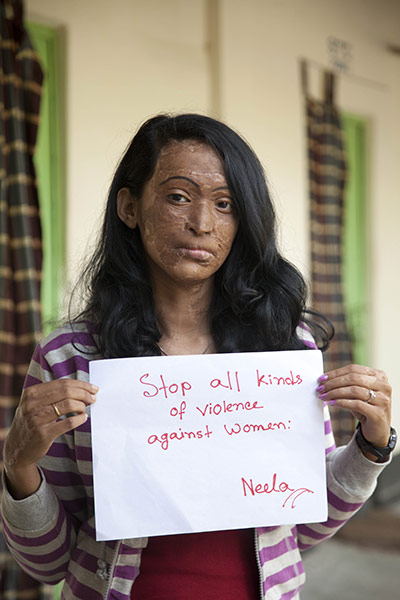
Acid attack survivors network in Bangladesh – in pictures

–The Guardian.

I found this very touching. The movie Tezaab was not just entertainment after all. Many people (mostly women and many of them in South Asia) today live a life because of the circumstances they have no control of.

Photograph: Nicolas Axelrod/ActionAid

Seventeen-year-old Neela Khatunis is one of more than 2,700 victims of acid attacks in Bangladesh over the past 10 years. ‘My husband was angry … because he claimed a dowry but my family couldn’t provide one,’ she says. ‘His plan was to sell me in Saudi Arabia – when I refused he threw acid on me then he fled’

For more pictures and information on victims of acids, see The Guardian‘s page.

Is BRB Nepal’s Ultimate Savior?

Victory for the young and the competent.

Is Dr Baburam Bhattarai The Ultimate Savior for Nepal? I would love to believe so. But, NO, he is NOT. He, however, is practically one of the very few, if not the only one, we now have faith on to deliver the constitution.

Finally. We Nepalese get to see Dr Babu Ram Bhattarai, the most competent of the all, to take the helm of the ever-lasting chaotic home politics. For decades, we have praised, prayed, and envied the intelligence, innocence, and inveiglement this man possesses.

We all like to believe that DR. BR Bhattarai, with all his brain and willpower, and some tricks and some magic, will get rid of the country’s miseries. As a fellow Gorkhali, that is even more true in my case. But Nepal’s problems are a little more complicated.

Nepalese society is a complex heterogeneous mixture of ethnic groups, languages, standard-of-living, education-level, economic power, geographical diversity, and tens of other aspects. In theory, these are the very problems Bhattarai and his CPNM party started a revolt which eventually dragged the country into a civil war. Now, that the CPN-M and Bhattarai have taken over the power, I shall try to point out his chances and challenges.

Attractive CV and Untainted Image.
Ever since he topped SLC in 2026, Bhattarai has been in the national limelight. For a society hungry for education and academic achievements, he is the perfect example for every student. As a politician, he is as a very witty speaker and someone who can deliver. His term as the finance minister in the Pushpa Kamal Dahal-led government is seen as highly successful. His commitments to anti-corruption and development sound more sincere than his usually extravagant and certainly lavish predecessors. His frequent visits to all parts of the country has made him a leader of the people. However, his image has been tainted by a few appointments he and his wife made during their terms in the Dahal cabinet.

Victory. Not for nepotism.

He speaks simple and speaks it with confidence and distinct vision. On top of that, he speaks for the lower class of the people. For this reason, he is loved, admired, and at the same time, feared. It will be very easy for the people to understand and judge his policies and achievements, unlike the previous PMs whose agenda used to be as abstract as: strengthen the democracy and transform the country into a Singapore. Bhattarai has to his advantage a very clear and distinct mission : deliver the constitution.

21st Century Communism : Pillar of Salt and Sand.
CPN-M have a very poor reputation in the international arena. Five years after the end of the war, they have not yet gained confidence of the US, which still lists them as terrorists. With the suspicion and non-cooperation communists get from most of the world, it is a फलामको च्युरा task for Bhattarai to take the country into a better economic path.

Let’s analyze communism the Nepalese context. After 1990, the educated and intelligent class experienced freedom. Students, business-owners, labourers, civil servants, journalists, and party-workers have seen the miracle of democracy. To camouflage this society into a strictly state owned corporate is a task impossible. The end of 20th century and the beginning of the 21st has proved that prosperity is possible through competition and freedom and not through constant state-moderation. Frequently, Bhattarai himself has stated that all private schools be nationalized and the industries be more closely moderated. The middle middle-class and above take this as a threat to their personal and social freedom.

I shall also discuss communism with respect to the current technological advances. With the mobile phones reaching most corners of the country and the ever increasing ubiquity of the Internet, the CPN-M’s model of governance is becoming more obsolete than ever. We have seen the fall of autocratic Arab states one after another. Nepal would not be different if autocracy would rise again.

21st Century communism. Is it a suitable base? Photo: nepalnews.com

CPN-M’s Intra-Party Struggle
The ever-growing struggle between various factions within CPN-M has brought the party to its nadir. This has weakened Bhattarai’s position in the national level. The moment the Baidhya faction or the Dahal faction decide to withdraw, his premiership is in question. The tradition of Nepalese communists to break away time and again has allowed political pundits to speculate if the same would be the case for the CPN-M.

Three factions. Trying to head to three different directons.

Right Person at the Right Time. But at a Wrong Place.
This is most true for Bhattarai. He may be the best person in the crowd. But he is definitely not in the right place. He may be a suitable candidate to deliver the Constitution, but certainly not for a matured society we all dream of. The very basic principles he stands upon and the heavily-factioned party he represents, as we discussed above, have made him a weak potential candidate in that scenario.

Constitutional Assembly and Beyond.
The Constitution is the first task at hand. Factionalism and power have been the ultimate reason for the rise and fall of the governments we have seen the past five years. Leaders have spent very little time in the constitution writing process. What’s more? They admit it. It is time people like Bhattarai concentrate on the very reason they were elected for.

As for the post-CA period, we may still have to look onto for some other leader to emerge from a party whose base is more towards the center. OR, we may have to expect some softer political stance from people/parties like Bhattarai. The search for the ultimate savior is still far from over.

Note: All views are personal. Political tilt – none. The analysis on communism is carried out more on practical aspect than theoretical.

Is Nepal Heading to a Psycho-Society ?

During the past few years, we Nepalese have had to hear some very-psycho and some super-psycho news.

The list would go forever. But I won’t irritate you with too many of them.

The question is – did we hear these kinds of news before, say two decades back ? YES, we did. But definitely NOT AS MANY.

Twenty years ago, a single murder case used to make national headlines. Each case used to talked about in homes, tea-shops, offices, buses, and carrom-board games, and almost everywhere. It used to be sung during Teej. It would be sung by गन्धर्वs home to home.The nation would mourn and sympathize the victims.

Why are such brutal murder cases everyday news these days? What elements in our society have incited such crimes? What steps are necessary to minimize them in future ? Those are the aspects I shall discuss in this article. Note, for ease, the politically motivated crimes are out of scope of this discussion.

Maoist’s War
While the Maoist war started and ended for a totally different objective, the killings and suffering it brought changed the Nepalese social landscape forever. It not only displaced tens of thousands of people, but also made people hard-hearted, distrustful, and unfriendly. Gone are the days when साँझका पाहुना were भगवान, when walking during nights was not unsafe, and when strangers gathered warm smiles rather than suspicious looks. Maoist war left an impression on people that killing is not a big deal and that one can come away with it if he/she has money or people/mass in pocket.

Uncontrolled Urbanization
This is the root of several social problems of Nepal. Crime is no exception. Too many strangers with different standards of living, with their own values, accumulated in limited areas, in no time. This is comparable to the reaction inside a beaker with several chemicals poured into it simultaneously. In this scenario, even minor incidents can easily turn unnecessarily violent. Also, it becomes a perfect ground for organized crime.

Poverty and Unemployment
This is the main reason for crime and hooliganism. Poverty incites meanness, greed, anger, and all sorts of negative thinking. Plus, when people have nothing to do, they find ways to utilize their brain. In older days, the only way to do so used to be by time-passing in chiya-pasals and bhattis. Now, in cities, young and energetic jobless people are capable of more than guff-gaff and card-playing. When, the attitude is negative, then this potential can prove disastrous for the society.

Insufficient Moral Education
Nepalese education badly needs to include contents on morals and ethics in textbooks and courses. With the constant increase in population, higher criminal rates are inevitable unless people are educated to adjust themselves in the (newer) society. However, general attitude of typical Nepalese to people of different kind (to both foreigners and fellow countrymen of different race/sex/standard) is usually unhumble if not hostile. Also, Nepalese attitude are driven more by emotion than by reasons. To name a few emotion driven काण्ड: The Hritik-Roshan kanda, the destruction of the Kathmandu mosque after the murder of 12 Nepalese in Iraq, and the recent reaction that Tasleema Nasreen’s remarks on Nepal provoked on Nepalese cyber-youths. Without proper education and moral values inside each citizen, the Nepal cannot escape from crimes.

Impunity
Impunity does not directly incite a psycho-crime. However, it does send encouraging message to potential criminals. Criminals feel safe on their part to carry out illegal activities. Without checking all kinds of crimes – murder, corruption, etc – the society cannot prosper; without prosperity, crime rates do not fall.

There is a pattern in the example cases I listed in the beginning of this discussion – the victims are from weaker part of the society: children and young women. The perpetrators in such cases are mentally unsound, for otherwise they would not commit the crimes on first place. In the plight of Nepalese society (which I mentioned above), they find easy to amplify their temptation.

Hostile crimes are not uncommon in developed countries too. In fact, they are often much more violent and ruthless in matured societies. US citizens are victims of mass killings in universities and schools by often young and confused people. Recently, Norway saw a massive bloodshed on its soil. First world countries are prepared to battle such issues to prevent them from happening again. However, in case of Nepal, where we are fighting to solve basic problems, the above mentioned aspects need to be addressed. The other areas that need attention are: tighter law enforcement, stable governance, and higher morale for security forces.

The Outsider : An Insider’s Review

AlbertCamus

Just finished reading the famous novel “The Outsider” by the famous Albert Camus.

Albert Camus

Camus is a 20th century French writer, journalist, and philosopher who won the Nobel prize for literature in 1957. He was born in 1913 in the then French Algeria and grew up as a poor fatherless kid in Algiers. His famous publications include The Outsider, The Plague, The Fall, and numerous other books.

‘Camus could never cease to be one of the principal forces in our cultural domain, nor to represent, in his own way, the history of France and of this century.’ – Jean-Paul Sartre, in Camus’ obituary (excerpt from the Introduction section of the book).

The Wikipedia is a better resource than I am for other details. Click Here.

Camus’ writings gave rise to a philosophy called absurdism. Philosophy is not my area of expertise. However, the outside-the-trend insights in his writings are expressed in a very easily-understandable narration. The Outsider is itself the best example.

About the Book

TheOutsider-AlbertCamus
Original title: L’Etranger (French).

Also translated as The Stranger by other translators. First published in 1942. Camus wrote it when he was 28.

A very small book; you can finish it in a few days, if not hours. Several translations are available. The one I read was translated by Joseph Laredo and is about 120 pages in A6 size.

Stuart Gilbert’s translation of the book in pdf.

The Outsider is often referred as an “existential” novel. However, Camus himself denied he was an existentialist.

Characters

Meursault: the protagonist. He is a French born and living in Algiers, Algeria. A young man who lives his own life. He thinks logically and has very little emotion within him. He has his own reasons for everything he does. His attitude is not easily accepted by the society – hence, an outsider.

Marie: Meursault’s girlfriend. A kind and beautiful lady who eventually wants to get settled with Meursault. She is attracted to him for the weird person he is. But at the same time, she is worried that this very nature of him might embarrass her someday.

Raymond: A neighbor man who befriends Meursault to overcome his trouble with his own girlfriend. Meursault eventually has to pay a very heavy price because of this friendship.

And there some other minor characters too. But I shall skip them!

Plot

The book opens with, “My mother died today. Or maybe yesterday, I don’t know…” This is a very unconventional way to express a sensitive issue like mother’s death.

Meursault had admitted his mother to a nursing home facility in the countryside because he could afford time and money to keep her with him. He reluctantly goes as far as the old people’s home and does not show any interest to see his mother’s body. His weirdness of not showing emotions at the demise of his mother takes everyone in the facility by surprise. He further astonishes his neighbors by going to movie and getting drunk in the next few days. Every time someone tries to console him, he tries to explain that it is not the case, sometimes even frustrating him.

According to Meursault, there’s no use mourning at his mother’s death because she’d have died someday anyway.

Meursault develops a friendship with Raymond, his neighbor. Meursault is eventually dragged into Raymond’s enmity with his own girlfriend and her brother, an Arab. On a very hot summer day when Meursault and his friends are all having a good time at a beach, they encounter the Arab and his friends. After a few complicated events, Meursault ends up shooting a man killing him on the spot.

Motive to kill, he has none, but it’s the reflex to self-defend himself. It is also the blinding and blazing sun that has made him lose his balance.

In the days that follow, in the court, Meursault is portrayed as a freak (and hence, the outsider) for sending his mother away to an old people’s home. His indifference to her death is also taken seriously by the court. He vehemently tries to explain his point of view, which goes in vain. The court (which represents the society as a whole) tries to single him out on the basis of what sort of person he is rather than what crime he has committed.

I shall not divulge the ending though. You’d be disappointed at me when you read it. But I can promise you, the second half of the novel is very interesting. Meursault’s logic of accepting/denying the situation he faces, is something that insiders have hard time believing. And, an adamant man he is. It’s impossible for anyone to persuade him into doing something that he does not believe in. An example is his refusal to believe in the God.

In this book, Camus has portrayed the life a young and carefree man who has his own ways doing things. He has no grudges against anyone, but is somehow framed into a situation that he has no intention of getting into. The society criticizes and severely punishes him for not behaving and not acting as everyone else.

Like they say, सुनेको पोखराभन्दा देखेको पोखरा राम्रो !, there are far more aspects that have not been introduced here. I hope you read it for yourself. Happy reading !